Your Life With God Is Like a Hazelnut
There are many ways Scripture helps us understand our relationship with God. We are sheep under the care of a Shepherd, branches connected to a vine, children adopted into a family, and clay being shaped in the hands of a potter. Each image tells us something important about who God is, who we are, and what it means to belong to Him.
But what if I told you that your life with God is also a little like a hazelnut?
It’s not exactly a flattering comparison. Hazelnuts are small and easily overlooked, hardly symbols of strength or significance. They don’t inspire awe. No one builds monuments to hazelnuts. In fact, depending on your taste, you may not even like hazelnuts! I once heard a pastor joke that the hazelnut coffee creamer at his church is always the one flavor left untouched each week. Yet this unlikely image has captivated me.
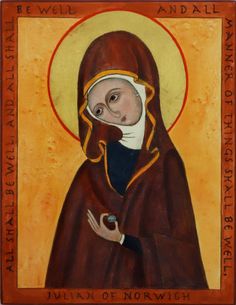
It comes from Julian of Norwich, the remarkable fourteenth-century Christian whose Revelations of Divine Love is the earliest surviving book written in English by a woman. Julian lived through extraordinary hardship. She survived outbreaks of the Black Death, lived amid political and social upheaval, and nearly died herself at the age of thirty. During that serious illness she received a series of visions of Christ that she later recorded with profound theological insight and remarkable pastoral warmth.
One vision in particular has lingered with me. She writes:
“And in this he showed me a little thing, the quantity of a hazelnut, lying in the palm of my hand, as it seemed. And it was as round as any ball. I looked upon it with the eye of my understanding, and thought, ‘What may this be?’ And it was answered generally thus, ‘It is all that is made.’ I marveled how it might last, for I thought it might suddenly have fallen to nothing for littleness. And I was answered in my understanding: ‘It lasts and ever shall, for God loves it.’ And so have all things their being by the love of God. In this little thing I saw three properties: the first is that God made it; the second, that God loves it; and the third, that God keeps it.”
Three simple observations: God made it. God loves it. God keeps it.
The more I reflect on those words, the more I realize how beautifully they describe our lives with God. Because if we are honest, sometimes our lives can feel a little like Julian’s hazelnut—small, fragile, vulnerable, and easily overwhelmed by forces much larger than ourselves.
There are seasons when we feel strong and confident, but there are also seasons when circumstances remind us just how little control we actually have. It may be a diagnosis we didn’t expect, a relationship we cannot repair, a child we cannot protect, a financial situation we cannot solve, a prayer that seems unanswered, a loss we never imagined experiencing, or simply the realization that life has not turned out quite the way we expected.
Somewhere beneath all of those circumstances is often a deeper question: Will I be okay? Can I really trust God with my life? Julian’s little hazelnut offers a beautiful answer.
God Made You
Your life is not an accident. The opening chapter of Scripture tells us that humanity was created deliberately and personally by God: “So God created man in his own image, in the image of God he created him.” — Genesis 1:27
Of everything God created, human beings alone are described as bearing His image. There is something about you that reflects the intentional craftsmanship of your Creator. Psalm 139 makes it even more personal: “For you formed my inward parts; you knitted me together in my mother’s womb… I am fearfully and wonderfully made.” — Psalm 139:13–14
Notice the language: formed, knitted, made. You are not self-created; you are God’s workmanship.
That truth runs directly against one of the strongest messages of our culture. We are constantly told that our identity is something we have to construct for ourselves: define yourself, prove yourself, reinvent yourself, make something of yourself. Scripture begins somewhere entirely different. Before asking what you have made of your life, Scripture asks, Who made you?
God did. And that means your deepest identity is received before it is achieved. Your worth is not ultimately determined by your accomplishments, possessions, appearance, intelligence, influence, failures, or what anyone else thinks about you. You bear the image of your Creator.
Like Julian’s hazelnut, you may sometimes feel very small in a very large universe, but you are not insignificant. God made you, and He made you intentionally.
God Loves You
Julian’s second observation is perhaps even more difficult for many of us to believe: God loves what He has made.
Most Christians know that God loves them. We have sung about it since childhood. We quote John 3:16 and talk about the love of God constantly. But knowing that God loves us and actually living as someone deeply loved by God are two very different things.
We know ourselves too well. We know the thoughts no one else hears, the decisions we wish we could undo, and the places where we have failed. We know our inconsistencies, weaknesses, selfishness, pride, and sin. If we are not careful, we begin imagining that God’s love rises and falls according to our performance. When we are doing well spiritually, we assume God must be pleased with us. When we fail, we instinctively pull away.
But the gospel tells a very different story. Paul writes: “But God shows his love for us in that while we were still sinners, Christ died for us.” — Romans 5:8
God did not wait for you to become lovable before He loved you. He loved you in your sin, pursued you in your wandering, and sent His Son for you when you could do nothing to rescue yourself. Through Christ, He has made you His own.
The love of God does not mean that He leaves us unchanged. Quite the opposite. His love is what makes transformation possible. Because we are secure in His grace, we can tell the truth about our sin. Because we know we are loved, we can step into the light without pretending. His kindness leads us to repentance.
We are not loved because we have finally become beautiful. We are becoming beautiful because we are loved.
Julian looked at that tiny hazelnut and wondered how something so small could continue to exist. The answer she sensed from God was wonderfully simple: “It lasts…for God loves it.”
When you wonder whether your failures have exhausted God’s patience, remember the hazelnut. God does not merely love an imaginary, improved, future version of you. God loves you.
God Keeps You
Julian’s final observation may be the most comforting of all: God keeps what He makes.
God did not create you, save you, and then leave you to hold your life together by yourself. He sustains you, carries you, and keeps you. Paul says something extraordinary about Jesus in Colossians 1: “He is before all things, and in him all things hold together.” — Colossians 1:17
Think about what that means. The universe itself is not self-sustaining. Every galaxy, every star, every atom, every molecule in your body, every heartbeat, and every breath you take continues to exist because Christ continually sustains His creation. Hebrews says that Christ is “upholding the universe by the word of his power” (Hebrews 1:3).
And here is where this becomes deeply personal: If Jesus can hold the universe together, He can hold you together. That doesn’t mean you will never suffer or that life will always make sense. It doesn’t mean you will never experience grief, disappointment, weakness, confusion, or seasons when God seems far away. It means that beneath all those things is a stronger reality: you are being held.
Sometimes faith feels like holding tightly onto God. But perhaps one of the great lessons of the Christian life is discovering that our security rests far less on the strength of our grip on God than on the strength of His grip on us.
Jesus said of His sheep, “No one will snatch them out of my hand” (John 10:28). What a promise. There will be seasons when your faith feels strong and seasons when it feels weak. There will be days when prayer comes naturally and days when you struggle to find words. There will be moments when God’s presence seems unmistakable and others when you wonder where He is. But His faithfulness does not fluctuate with yours.
He nourishes you through His Word, meets you in prayer, strengthens you through His people, and works through circumstances you understand as well as circumstances you don’t. Even when you cannot see what He is doing, He is keeping you.
So…Remember the Hazelnut
Julian held something tiny in her hand and saw in it a picture of all creation. She wondered how something so small and fragile could possibly last. The answer was beautifully simple: God made it. God loves it. God keeps it.
Perhaps you need that reminder today. You may feel small or fragile. You may be carrying something you don’t know how to carry. You may be wondering how a particular chapter of your life is going to turn out, or even whether you have enough faith or strength to make it through.
Remember the hazelnut.
God made you. Your life is not accidental. You bear the image of your Creator, and He created you with intention and purpose.
God loves you. His love is not something you earn through your performance. In Jesus Christ, He has demonstrated His love for you at the cross and called you His own.
God keeps you. The One who holds galaxies together is holding you. The One who sustains the universe is sustaining you. And the One who began His good work in you has promised to bring it to completion.
Your life may sometimes feel like a hazelnut—small and fragile in the palm of an infinitely greater God. But perhaps that is precisely the point.
You are in His hands, and there may be no safer place in all the universe to be.
Prayer
Father, thank You for making me. When I feel insignificant or uncertain about who I am, remind me that I am Your creation, made in Your image and with purpose.
Thank You for loving me. When I become preoccupied with my failures or try to earn what You have already freely given, bring me back to the cross. Remind me that Your love rests not on my performance but on Your grace.
And thank You for keeping me. When my faith feels weak and my strength begins to fail, remind me that Christ is even now holding all things together by His powerful word. Help me to believe that the hands holding the universe are also holding me.
Teach me to rest in this simple truth: You made me. You love me. You keep me. And because I am Yours, I can trust You with my life.
Through Jesus Christ my Lord, Amen.